Designing With, Not For: Lilyfield’s Holly Towers on Elevating Community Voices
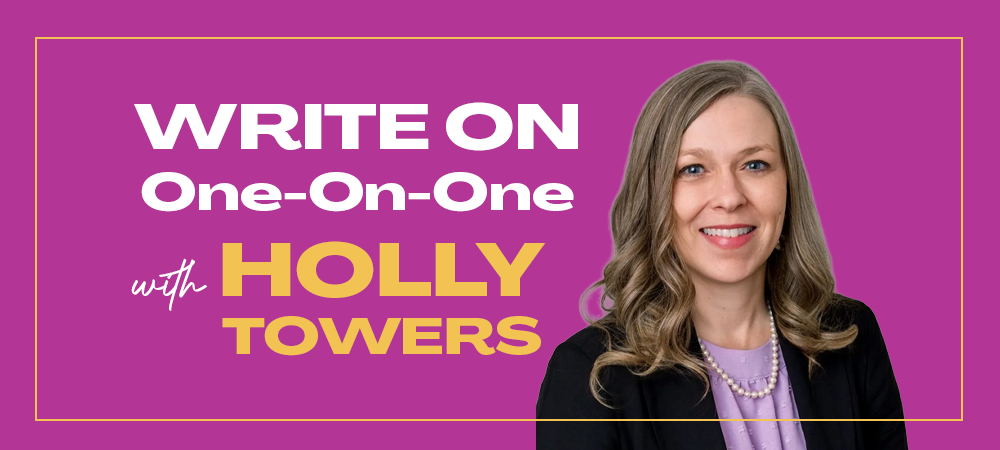
This month, Write On Fundraising’s Sales and Marketing Manager, AJ Loper, had a chance to sit down with the Executive Director of Lilyfield, Holly Towers. Holly has been in her role since 2008. She is a Licensed Clinical Social Worker. Before Lilyfield, Holly worked at the Center on Child Abuse and Neglect at the University of Oklahoma Health Sciences Center. She has experience as a mental health therapist working in the areas of child trauma, substance abuse recovery, post-traumatic stress disorder, and child abuse and neglect.
AJ sat with Holly to chat about program co-design, lifting up community voices, and how to handle it when donors say, “that’s not for us.” Below is a small excerpt of that conversation. Enjoy!
AJ: Hi, Holly! We met a few weeks ago at a Nonprofit Leadership Series breakfast hosted by Regent Bank, and you spoke about program co-design, among many other wonderful things. This is something I hadn't heard of in the nonprofit space before. Describe what that looks like in practice and what that means.
HOLLY: I'd say there's a growing understanding that many times the people who try to come up with solutions for problems are so far removed from the problem that they don't really even understand the problem to begin with, certainly not the origins of the problem, nor do they have enough practical information to understand how a solution might actually land in a community. If we're looking at any particular population or community, first of all, we need to understand, and when I say “we,” usually that's people with power. Typically we're talking about organized entities that have the resources that deploy them into the community.
If we, whoever “we” are, say: “Oh, over here in this neighborhood, they lack access to food. A great idea would be to start a food pantry, because these people don't have access to food. Here's food.” That would be a traditional mindset of program development. I see a problem, I know a way to meet that need, because I know how to set up a food bank, or I know people that give food away. And then I'm just going to pair these things together, and it's simple.
Co-design says: First you actually need to go into that community or population, and ask them what's important to them and what challenges they see.
They may say, "Hey, Holly, we actually have five food pantries in our community, we already have plenty of food pantries. The problem is they're only open once a month, you can only get a box of food, and they don't have any fresh food. I actually have food stamps, or I have a job. The issue is I don't have a 90-minute bus ride to the grocery store.” Then, I understand.
We're going to get together with the people who are impacted by this problem, define the problem, and together we're going to come up with a solution.
AJ: In the fundraising space this concept is community-centric fundraising. The community has a seat at the table, they decide the language that's being used, how they define themselves based on their aspirations as opposed to their problems or challenges. That’s where there's some overlap with community-centric fundraising and co-design; they work hand in hand.
A few months ago at the leadership breakfast, you said something that I wrote down: Listening means I have to change what I do. Talk a little bit about how listening leads the way in co-design, and how you overcome some of the barriers to listening.
HOLLY: Many of us who have gone to school, gotten an education, have professional licenses or certifications often know a lot about our profession, so we might actually be experts in something. As an expert in child trauma, I know a lot of information on how trauma affects children. I have some expertise there, and that can lead us to sometimes think, because I have this knowledge, I have an answer for people, and of course they're going to want that answer because they want their life to be better. What's interesting is someone wanting their life to be better or wanting improvement doesn't actually mean they want my answer.
I have a lot of information about child trauma and family functioning, and I have a deep knowledge about how adverse experiences impact family functioning, child development, and human development through the lifespan. What I don't have a lot of expertise on is you—virtually none. I don't know you. I don't know your story. I don't know your circumstances. I don't know your dreams, your aspirations, and your wishes. I don't know your day-to-day challenges. For me, it's recognizing that I do have information that can be helpful to people, but until I know those people, I don't really know how my piece fits in the puzzle of their lives. It's about not leading with all the things I know; it's about leading with, "I don't know you, but I'd like to."
Then, if they give me the honor of getting to be a part of their life, it's like, "Now that I know you, and you've given me something because you shared your story with me—which is a gift—maybe I have something to give to you. Maybe, maybe not. Do you want something from me?" If the answer is no, then that's fine. Nobody's required to care what I know. It's as much about our approach to people as anything else.
The reason we really have to change what we do is that someone can tell me their story, and I could still come out with everything I know. Changing what I do means, now that I know something about you, it's really asking for the invitation into their community, life, or population to see if what I have is valuable. What I know, can do, or can bring is only valuable if it's wanted by someone.
AJ: It sounds like there's a lot of curiosity and humility in coming into that space. It's such an individual experience to be alive, we couldn’t possibly know all the answers. That’s beautiful.
Now let's go into what the nitty gritty, day to day collaboration looks like between your program co-designers and your fundraising and development team. How do they work together? How do they keep each other grounded and on track?
HOLLY: A lot of our funders in the nonprofit space are entrepreneurs or business leaders. They understand that we can't do the same thing over and over and get different results, even if something has worked really well. Culture changes and needs change, and we have got to be innovative. Co-design actually helps nonprofits be more innovative, and that is something that speaks to funders a lot.
I've actually found sometimes when we do community listening sessions, the best people to host those are our fundraisers. They're really good at asking questions, and so our senior director of community engagement, who is our development person, she does a lot of our listening sessions with us and for us because she's very personable, she's very outgoing, she's definitely a people person, and she can ask questions in different ways. It also gives her firsthand information about what clients are saying, and so that's one way that we've really engaged our development team—is actually letting them be part of some of those things.
If you hold parent advisory councils, that's actually a great place. We have staff that help lead those; that could be some of your development team to actually be a part of that because a lot of that is about community engagement. How do we reach more people? Your development team is really good at that.
It's just really making sure that our development people stay close to the work as much as we can so they can tell the accurate story, and helping them feel a part of it. It's hard to be passionate about something that you don't feel like you're a part of.
We had a whole project that was funded last year called our Family Voices Project, and that was where we actually put together a museum-style exhibit of families—their picture, and then a museum-style kind of card. Our development team did that. We got the grant, and they were the right people to do that; they know how to make things look good, and they know how to write content. There are so many ways to engage your development team in the work. That project ended up being hugely beneficial to them, but also to our families, who now see their pictures on the walls. Those are some ways that we've done that.
AJ: In the co-design model, as in community-centric fundraising, we talk about the community defining what success looks like and having an active role in that success. How do you align the community's definition of success with the grant reporting or the donor's definition of success?
HOLLY: First of all, I think the community also has to help us define the problem. I would say the problem in our South Oklahoma City Family Resource Center that we were really interested in was there were disproportionately high rates of infants entering foster care in this community. But for most people in the community, that's not the actual problem.
When we came in, we actually said to families, "Hey, did you know that this is true in your community?" Their family may not have been affected by this, and they were like, "Yeah, of course it is, because here's the laundry list of challenges that people in our community face." Then we actually have so much more information.
The first thing is we're usually looking at a problem from a data perspective, and that hardly ever translates to the lived experience of a person. I like to think being very authentic and transparent is the best way: "Here's what we learned from the data. What do you think about that? What does that mean on the ground? What do you see in families?" From there we can say: “Okay, here are the three or four things that the families in the community see that are contributing to this problem that we see. Then ask them, what do you think would help?" And then, “What would success look like?"
We've done a couple of things at Lilyfield to make it streamlined for us. There's one measure that we do across every program, and that is the Hope Scale. Dr. Chan Hellman at the University of Oklahoma has done a lot of work with hope research, and that's pretty well known for most funders and state agencies. It's free and really easy to implement, so every single person that walks through the door at Lilyfield does a Hope Scale.
I can reasonably say if I'm working on increasing hope in young people, we know that's going to lead to an increase in academic success because the research has demonstrated it. Hope is a really easy one to make the case for.
We sometimes overcomplicate these outcome pieces. We can really dial it back and say, "Where do we want to make a difference, and what are a couple of things that we can measure that can help us know?”
AJ: I was curious to ask you about what it looks like when a donor is like, "That's not for us," or "We're going to pull out a little bit because that's not what we're wanting." It's hard being in a fundraising space or a nonprofit space that's in a scarcity environment and saying, "Oh wait, wait, wait, come back, we'll do what you want." How do you navigate that?
HOLLY: The first thing is, nobody owes me their money. When we get to steward someone's resources for the good of the community, it's a real honor. What you said about the scarcity piece is really important to me because all the resources are available, and so we have to stop being afraid. We have to do what we know is best for our community, and we have to do it wisely and with just an appropriate level of risk.
I'm a little bit of a calculated risk-taker when it comes to developing programs, which I think is good, but we've got to be wise, we've got to be ethical, we've got to spend the money correctly, and we have to have clean audits. All those things have to happen, and as long as that's happening, I just don't think we have to be scared if we're doing something that is valuable to the community. I believe the resources are available for that to happen, and if one funder is not going to fund us anymore, there are 10 other funders out there.
The other thing is just making sure that funding is diversified. Making sure that we're not overly reliant on corporations or businesses, or that we're not overly reliant on family foundations, individuals, or events, but that we've really diversified this pool of funding so that we have a lot of different doors to knock on and we aren't afraid to try different things.
A really good fundraiser said to me, "Oh, well, you just like grant writing because it's easy," and I thought, "It's kind of a hard way to get money, honestly." But I like it because it's an opportunity for me to take what the community has said, really put words to it, and bring it to life. When the funder is like, "That's a great idea!” Actually, that was the idea of this mom down the street who doesn't have a high school education. I just took the idea and organized it.
We just have to be confident in what we're doing and know that it's right if it is right.
AJ: I think that bravery, flexibility, and trust in your community are my key takeaways from today. Those speak to what both co-design and community-centric fundraising are looking to do in the nonprofit space. Is there anything else you would like to add today, Holly?
HOLLY: I do encourage, whether you're a fundraiser or a nonprofit, really listening and believing the people that we serve. They know what they need. Honoring and uplifting those voices that have often not had the chance to be listened to or honored, there's no better work. When we have a little bit of power, it’s really important to share that with people who haven't had it.